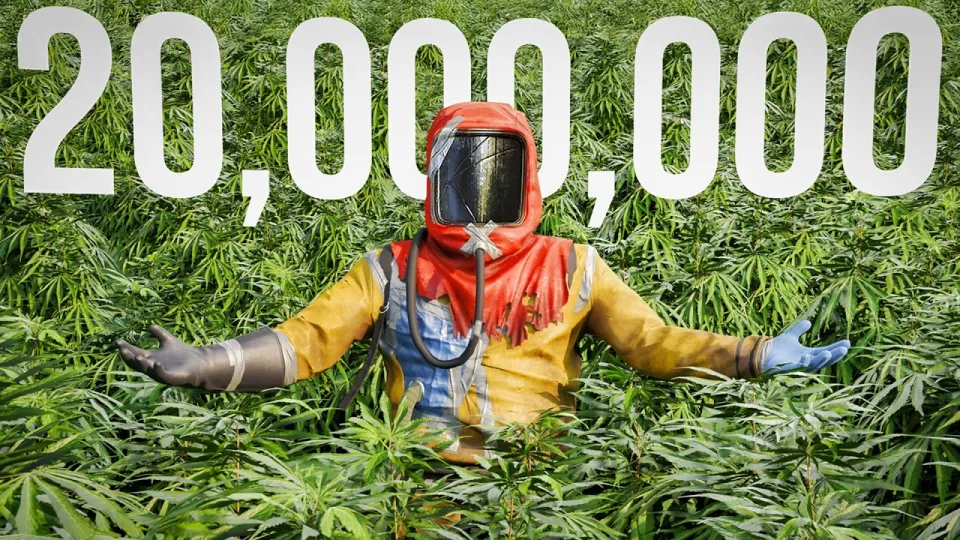
Rust, How JTeles Turned 126,000 Cloth Into a 20 Million Farming Run
Want articles like this for your own video to promote it on YouTube and Google? Order them through the Telegram bot @sat_sit_bot. It writes articles around your video, embeds the video and publishes them on popular niche websites (no ads). Free trial — 50 articles.
· based on the channel JTeles
Key takeaways
- JTeles began the wipe with 126,000 cloth and set a target of 20,000,000 cloth within 7 days.
- Viewers were invited onto the server to help build and defend the cloth farm.
- A large Russian clan discovered the project and tried to stop it with PvP, raids and base defense fights.
- The finished compound was large enough to cause server lag when players looked at it.
- The run required farming, alliances and offline defense by clanmates to stay on schedule.
Rust farming runs are usually about scraping together enough scrap for a workbench, but JTeles set a far bigger goal: start a wipe with 126,000 cloth and push it to 20,000,000 before the server resets, a seven-day window that turned into one of the most ambitious farming projects the game has seen. To get there he invited viewers onto the server, built what he calls the biggest cloth farm in Rust, and spent the wipe defending it from a clan that wanted the project dead. Anyone curious about the sponsored game featured in the video can grab the free-to-play offer through the War Thunder sign-up link.
What the 20 million cloth challenge actually involves
Cloth in Rust comes from hemp plants, and turning 126,000 into 20,000,000 means multiplying the starting stock by roughly 159 times inside a single wipe. Hemp grows in planters, which need to be watered, fertilized and harvested on a cycle, so the real constraint is not the plants themselves but the labor of planting, watering and collecting across hundreds of planter boxes. A farm of that scale becomes an industrial operation: rows of planters, a water supply, storage for the output and a crew to keep the cycle running around the clock. JTeles framed the goal as becoming Rust's number one farmer, and the video follows the build from the first small plot to a compound that eventually lagged the server when players looked at it.
Building Rust's biggest cloth farm
The build relied on scale and on people. Instead of farming solo, JTeles opened the server to viewers who wanted to take part, which turned the project into a shared base with rotating shifts of planters, waterers and haulers. Key elements of the operation:
- A dedicated farming compound with enough planter capacity to push output toward the 20 million target.
- A water and fertilizer supply chain so planters never sat idle.
- Storage organized for bulk cloth rather than for a normal wipe's worth of loot.
- A defense plan, because a base that size is visible from across the map.
- A schedule that kept the farm running while JTeles slept or was offline.
The result was a structure so large and so densely packed that rendering it became a performance problem for the server, a detail viewers noticed immediately when the compound came into view.
The clan war that nearly ended the run
Building the biggest farm on a server makes enemies, and in this case a large Russian clan found out what was happening and made stopping the project its mission. The conflict played out across the whole wipe: open PvP over farming routes, raids on the compound, base defense while under attack, and alliances struck with other groups to keep the pressure manageable. The farm's survival depended on clanmates holding the line during hours when JTeles was offline, defending the planters and the stored cloth against raids. That mix of industrial farming and full-scale clan warfare is what separates this run from a quiet solo grind.
Typical questions from viewers about the run
Most of the discussion around the video circles back to the same practical points. Viewers want to know how a cloth target that large is even achievable in seven days, and the answer is manpower: the farm only works because many hands plant and harvest while the owner sleeps. Others ask about the lag, since a compound built from hundreds of planters pushes server performance hard, and about the risk of losing everything to a raid, which is why defense and alliances matter as much as the farming itself. Experienced farmers in the audience compared it to their own large planter setups, noting that a farm of roughly a thousand planters can yield well over 15 million cloth in a wipe, though planting and harvesting it by hand takes hours on each end. The video's answer to all of this is scale plus teamwork, not a secret trick.
Links from the video
The video points to a few places beyond the gameplay itself:
- War Thunder free-to-play sign-up for PC and consoles: https://wtplay.link/jteles
- War Thunder mobile: https://wtm.game/jteles
- JTeles Discord community: https://discord.gg/jteles
- Twitter/X: https://twitter.com/xJTeles
- TikTok: https://www.tiktok.com/@xjteles
Conclusion
JTeles turned a cloth target into a full server storyline: a 126,000 starting stock, a 20,000,000 goal, seven days to hit it, and a clan war in the middle of the harvest. The farm succeeded because of the crew that planted, hauled and defended it, including the shifts that held the base while its owner was offline. The video is a breakdown by the channel JTeles of how far a coordinated Rust group can push an economy when the whole server is watching. If you want to try the sponsored game from the video, the War Thunder registration page is the place to start.
Questions & answers
How long did JTeles have to reach 20 million cloth in Rust?
The goal was set for a single wipe, which gave him seven days to go from 126,000 cloth to 20,000,000. That deadline is why the farm had to run continuously, with viewers and clanmates covering shifts while he was offline.
Why did the farm cause server lag?
The compound grew to hundreds of planters plus the supporting structures and storage, all packed into one area. Rendering that many entities at once is heavy on the server, and viewers noted that simply looking at the base caused noticeable lag.
Can a solo player farm millions of cloth in Rust?
It is possible but extremely slow. Large planter setups can produce well over 15 million cloth in a wipe, yet planting and harvesting them manually takes hours each time. JTeles relied on a crew of viewers and clanmates rather than farming alone.
What stopped the clan from destroying the farm?
Defense and alliances. Clanmates defended the compound during raids and while JTeles was offline, and alliances with other groups reduced the number of attackers. The farm survived because the fighting was shared, not carried by one player.
Source: I Became Rust's #1 Farmer... · Markdown version